How Land Purchases Were Registered Under the British Mandate
Under the Mandate, a land sale was valid only once recorded in the Land Registry (Tabu). Here is how purchases were registered from 1920 to 1948.
Key points
- From 1 October 1920, under the Land Transfer Ordinance, a sale or mortgage of land in Palestine was not valid unless it was recorded in the Land Registry.
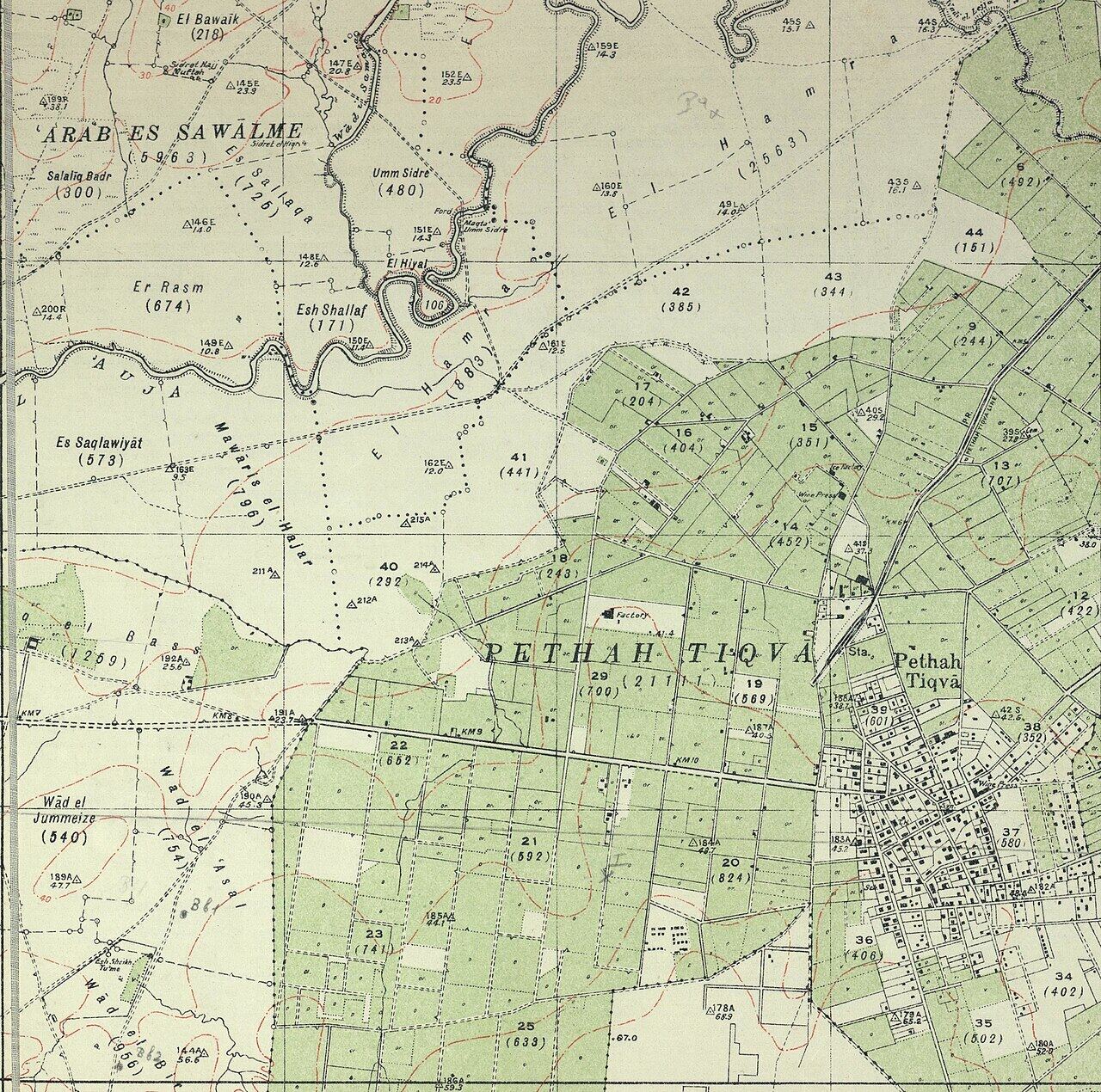
- The Land (Settlement of Title) Ordinance of 1928 began a slow, village-by-village process that surveyed land into numbered blocks and parcels and recorded a near-conclusive title for each parcel.
- By the end of 1945 roughly 4.8 million dunums had been settled, so a large share of the country was still recorded under older, less precise registers.
- Israel's 1948 Law and Administration Ordinance kept the law in force on 14 May 1948, so Mandate-era registration rules and registers carried over into the new state.
Under the British Mandate (1920–1948), a purchase of land in Palestine had to be recorded in the government Land Registry, known as the Tabu. From 1 October 1920 the Land Transfer Ordinance made any sale or mortgage invalid unless it was recorded there. From 1928 the Land (Settlement of Title) Ordinance added a slower, more precise system that surveyed land into numbered blocks and parcels and recorded a near-conclusive title for each one.
For a family abroad holding a memory that a great-grandfather "bought land in Palestine", this matters a great deal. It means a completed purchase was supposed to leave an official trace, and that the trace may look very different depending on where and when the land was bought.
Most of what follows comes from the Mandate government's own account of its land system. That account is in Chapter VIII of A Survey of Palestine, prepared in 1945–1946 for the Anglo-American Committee of Inquiry.
What was the land registry before the British arrived?
The Ottoman Tabu
The word Tabu comes from the Ottoman land system. Under Ottoman law, most agricultural land was miri: the state held ultimate ownership and granted individuals the right to use it. The one-time payment for that grant was called tapu. A holder could transfer the right only with state permission and had to register the transfer in the land registry.
After the Ottoman Land Code of 1858, the Ottoman government passed a Land Registration Law the same year. According to the Survey, land registries in Palestine were apparently opened between 1867 and 1873.
Why the Ottoman registers were unreliable
The Survey is frank about the weaknesses it inherited:
- Cultivators saw the registers as a tool for taxation and military conscription, so only a small share of transactions was recorded.
- There was no survey. Areas were guessed, given in the quantity of seed needed to sow them, or left out entirely.
- Boundaries were described loosely, by neighbours' names or by roads, streams and hills.
- People sometimes recorded a much smaller area than they really held, to reduce tax.
When British forces occupied the country in 1917–1918, they took over thirteen district land registries whose records were, in the Survey's words, in "a state of complete chaos". The retreating Turkish army had also removed many records to Damascus, Adana and towns inside Turkey, and many were never recovered.
The key Mandate land ordinances
The Land Transfer Ordinance, 1920
After the occupation, the military authorities closed the land registries and banned transactions in land. In 1919 the government invited Judge Williamson, then Registrar-General in the Sudan, to design a new system. He devised a set of registers and forms.
In 1920 the Land Transfer Ordinance lifted the military ban and established a land registry. Its central rule was that no "disposition" of land was valid unless recorded in the Land Registry. The ordinance defined a disposition broadly. It covered a sale, mortgage, gift or dedication of waqf (a religious endowment), but excluded a will and a lease of three years or less. The registries reopened on 1 October 1920.
The Land (Settlement of Title) Ordinance, 1928
The 1920 system still had no proper map behind it. The Survey describes it as "a combination of a register of deeds and a register of transactions". Acting on advice from Sir Ernest Dowson, the government decided in 1927 to introduce registration of title on the Torrens model used in Australia and elsewhere in the British Empire. The Land (Settlement of Title) Ordinance was enacted in 1928 to carry this out, and was amended in 1937, 1939, 1942 and 1944.
The Land Transfers Regulations, 1940
Families researching purchases from the 1940s should also know about the Land Transfers Regulations of February 1940. They followed the 1939 White Paper and divided the country into three zones:
| Zone | Approx. area | Rule (simplified) |
|---|---|---|
| Zone A | 16,680 sq km | Transfer of land, except to a Palestinian Arab, prohibited, with listed exceptions |
| Zone B | 8,348 sq km | Transfer by a Palestinian Arab, except to a Palestinian Arab, prohibited without the High Commissioner's approval |
| "Free" zone | 1,292 sq km | No restriction |
So where a plot lay could affect whether, and how, a Jewish buyer's purchase from 1940 onward could be registered.
What did "settlement of title" mean?
"Settlement" here means settling the legal title to land. The Survey defines it as examining rights to land, resolving disputes about ownership, boundaries and category, surveying the land, and recording the rights in the Land Registers. It stresses that this "must not be confused with the settlement of people on the land."
The process worked village by village:
- The High Commissioner declared a Settlement Area in the Palestine Gazette. A Settlement Officer then published a notice of intended settlement and a Settlement Notice for each village.
- Field officers went over the land parcel by parcel, recording every claim on special forms. Village Settlement Committees assisted them.
- Schedules of claims were posted block by block for at least fifteen days, so objections and further claims could be made.
- A Settlement Officer held a public investigation and decided disputes. Contested cases could become court actions, with appeal to the Supreme Court by leave.
- Final Schedules of Rights were posted for thirty days. They then went to the Registrar of Lands to be entered in new registers, and the Survey of Palestine prepared final block plans.
The result was a title the Survey calls "almost indefeasible": after settlement, the register could be corrected only on grounds of fraud.
How far did settlement get?
Settlement of title was slow. By 31 December 1945, 4,808,458 dunums had been settled (a dunum is 1,000 square metres). That figure includes the Ghor Mudawwara lands in the Beisan sub-district. For comparison, the Survey gives the area of the whole country as about 26,320 square kilometres. A great deal of land, including most urban property, was therefore still recorded under the older systems when the Mandate ended. A 1958 United Nations report confirms that urban title was "generally not 'settled'".
What does a Mandate registration record contain?
That depends on which of the three systems recorded the land.
Unsettled land: deeds and transactions (1920 onward)
For a sale between living people, the Survey describes a fixed procedure:
- The parties petitioned the Registrar of Lands for the district where the property lay. They attached documents of title and a certificate from the village or quarter mukhtar (headman) describing the owner, situation and boundaries.
- When needed, a government or licensed private surveyor surveyed the land.
- The petition was entered in a petition book and the title was investigated.
- Once a revenue officer confirmed that no taxes were owing, the deed of sale, mortgage or lease was prepared. It was read and explained to the parties and signed before the Registrar.
- Fees were charged as a percentage of the property's value. The document was then entered in the register.
- The original of every document stayed in the Registry. Buyers in a sale received a certificate of registration.
A family's surviving paperwork is therefore often a copy or certificate, while the original deed was kept by the registry. Our guide to documents at home that may prove a land purchase looks at this from the family's side.
Settled land: block and parcel
Land that had gone through settlement was entered in a new loose-leaf register. It used no verbal boundaries at all: each property was identified by block and parcel number, and the plan was conclusive evidence of area and boundaries. The 1958 UN report describes these as "Registers of Title". It says they recorded each parcel's location, area and description, its owners and their shares, and encumbrances such as mortgages and leases.
Other features worth knowing
- Language. According to the Survey, the registers and books used since 1920 were kept in English. Documents submitted could be in any of the official languages. The UN report notes that the land records it worked with were in English and Arabic.
- Ottoman records still mattered. The Survey notes that "constant reference to the old Turkish registers is still necessary".
- Inheritance. An intestate estate was registered on production of a certificate of succession from the competent court, together with evidence of the heirs' identity. A bequest under a will was registered on production of probate or letters of administration.
How much land were Jews registering?
The registry's own figures show how active it became. Transactions completed each year rose from 3,361 in 1921 to 49,133 in 1935, and stood at 44,251 in 1945. In total there were 584,191 transactions between October 1920 and the end of 1945.
The Survey also reports that between 1 October 1920 and 31 December 1945, Jews purchased and registered a net 938,365 dunums. It adds that a commonly accepted estimate puts Jewish holdings before October 1920 at about 650,000 dunums. The Survey notes that the Jewish National Fund's statutes prohibited it from selling land, while its subsidiary Hemnuta could hold land intended for later transfer.
Why does this matter for a family today?
Mandate registrations carried over into Israel
When the State of Israel was established, section 11 of the Law and Administration Ordinance, 1948 provided that the law that existed in Palestine on 14 May 1948 "shall remain in force". This was subject to the new state's own legislation and to modifications resulting from the establishment of the state.
The Mandate registers also stayed in use. A 1958 UN report describes land registry records "in the possession of the Israel Government" being consulted in the offices where they were kept. Mandate land law itself was gradually replaced. The Israeli Land Law of 1969 repealed the remaining Ottoman land legislation, and the settlement-of-title rules were reissued as the Land (Settlement of Title) Ordinance (New Version), 1969.
Today the land registry is the Land Registration and Settlement of Rights Authority (Tabu) of the Ministry of Justice.
What this means in practice
- A completed purchase after October 1920 should have left a registry entry. A family story that is true may be traceable to a petition, a deed or a register entry.
- Location shapes the record. Land in a settled area may be identifiable by block and parcel. Land in an unsettled area may be described only by owner names and boundaries in a deed register, which makes it harder to locate.
- The name on the register matters. Registers kept in English, with Arabic or Hebrew documents attached, can spell a great-grandfather's name in ways the family would not expect.
- A record shows a moment, not the present. Every later sale, mortgage or succession was meant to be recorded too, so an entry from the 1930s may have been followed by changes the family never heard about.
None of this says whether a family still holds any right today. That depends on the specific record and on Israeli law as it stands now, which can change, so a qualified Israeli lawyer should advise on any particular case. Our guide to inheritance of land in Israel for heirs abroad covers the general picture.
Where are these records today?
Mandate registration records sit within the Israeli land registry system. Related Mandate government files, Zionist land-purchase bodies' papers and municipal records are held elsewhere. We describe each institution, what it holds and how to approach it in Israeli archives for land records from the 1920s to the 1950s. If you are just starting out, begin with how to find out if your great-grandfather bought land in Israel.
If your family has a name, a town and a rough date, that is often enough to begin. You can tell us what you know and we will check whether a search is likely to find records.
Not ready to send an inquiry? Start with our free Family Land Research Kit (PDF): what to gather at home, where each kind of record is kept, and the words you will meet in old deeds.
Questions families ask
What is the Tabu?
Tabu is the everyday name for the land registry, a term inherited from the Ottoman period. Under the Mandate and in Israel today it refers to the official register of rights in land, now run by the Ministry of Justice.
If my great-grandfather bought land in the 1930s, would it have been registered?
From 1 October 1920 a valid sale had to be recorded in the Land Registry, so a completed purchase should have left a registry entry. How precise that entry is depends on whether the land had already gone through settlement of title.
What does 'settlement of title' mean?
It was a Mandate process that surveyed land, investigated every claim to it in public, and recorded the result as a numbered parcel in a new register. It has nothing to do with settling people on the land.
Did Mandate land registrations stay valid after 1948?
Israel's Law and Administration Ordinance of 1948 kept the law that existed on 14 May 1948 in force, subject to later legislation, and the Mandate registers remained in government land registry offices. Whether a specific registration is still valid today is a legal question for a qualified Israeli lawyer.
Were the Mandate land registers kept in Hebrew?
According to the 1946 Survey of Palestine, the registers and books used since 1920 were kept in English. Documents submitted to the registry could be in any of the official languages, and older Ottoman registers were still consulted.
Sources
- A Survey of Palestine, Volume I (prepared December 1945–January 1946 for the Anglo-American Committee of Inquiry), Chapter VIII: Land — Government of Palestine, hosted by the Berman Jewish Policy Archive — Ottoman registration, Land Transfer Ordinance 1920, registration procedure, Land (Settlement of Title) Ordinance 1928, Land Transfers Regulations 1940, figures to 1945
- Sixteenth Progress Report of the United Nations Conciliation Commission for Palestine, A/3835 (18 June 1958) — United Nations — settled vs non-settled land; Registers of Title and Registers of Deeds; records in English and Arabic held by the Israeli government
- Leon v. Acting District Commissioner of Tel-Aviv, HCJ 5/48 (case summary) — Cardozo Israeli Supreme Court Project, Yeshiva University — text of section 11 of the Law and Administration Ordinance, 1948
- J. Weisman, 'The Land Law, 1969: A Critical Analysis', Israel Law Review 5(3), 1970 — Cambridge University Press — Land Law 1969 repealed Ottoman land legislation; Land (Settlement of Title) Ordinance (New Version), 1969
- National service centre: Land Registration and Settlement of Rights Authority (Tabu) — Kol Zchut — today's land registry is an authority of the Ministry of Justice
This guide is general historical information, not legal advice. Every family's case depends on the specific records found.